Fitness
How to Choose a Yoga Mat: Thickness, Material and Grip

Updated Published
This article may contain affiliate links. If you buy through them, we may earn a commission at no extra cost to you. Read our affiliate disclosure
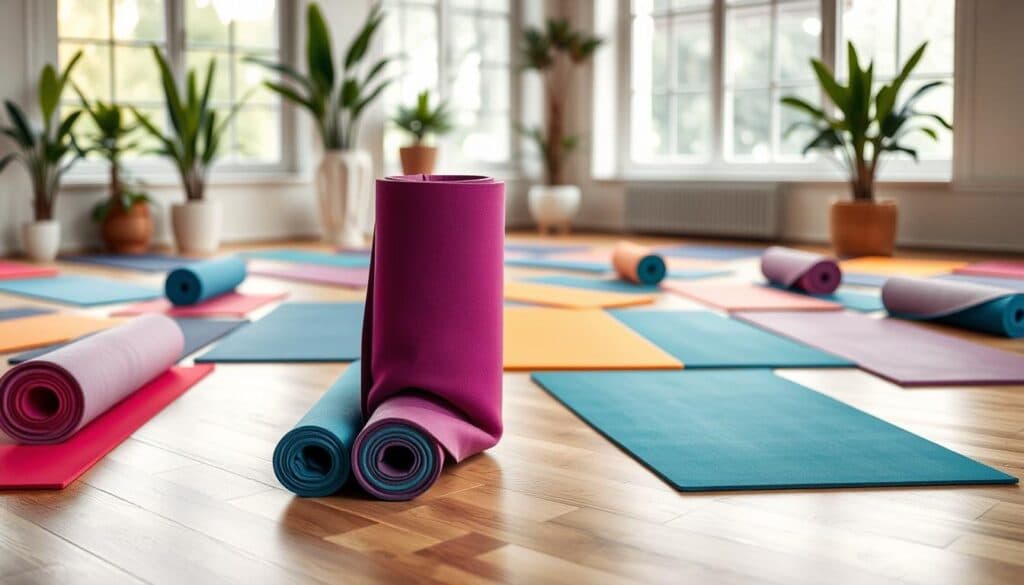
How to choose a yoga mat: what thickness suits your practice, how PVC, TPE, rubber and cotton mats compare, and what to check for grip and size.
On this page
A yoga mat is a simple product, but the wrong one is easy to notice: it slides on the floor, gets slippery when you sweat, or leaves your knees aching. This guide explains the four things that actually separate one mat from another (thickness, material, grip, and size) so you can choose one that fits how you practise. We haven’t tested specific mats for this guide, so there are no product rankings here, just what to look for.
1. Thickness: stability versus cushioning
Thickness is the biggest trade-off. Outdoor retailer REI suggests a mat of about 1/8 inch (roughly 3 mm) as a general starting point. From there:
- Thinner mats (including travel mats) keep you closer to the floor, which helps balance in standing poses and makes them lighter to carry.
- Thicker mats (up to about 1/4 inch) add cushioning for restorative or floor-based practice and for sensitive knees, wrists, or hips, but can feel less stable in balancing poses.
- If you practise on a hard floor and do a lot of kneeling, a standard mat plus a folded blanket or knee pad under your knees is often better than one very thick mat.
2. Material: grip, durability, and environmental impact
- PVC: durable, easy to clean, and grips the floor well. It’s latex-free, but not biodegradable, and it can get slippery with heavy sweating.
- TPE: a blend of plastic and rubber polymers. It’s often lighter and may be recyclable, but is usually less durable than PVC of the same thickness.
- Natural rubber: good traction and a more sustainable choice, but heavier, and not suitable if you have a latex allergy. Check the label: many rubber mats are labelled as containing latex.
- Cotton and jute: natural and breathable, with texture that grips the body, but less cushioning and less grip on smooth floors.
3. Grip and texture
Grip has two parts: how well the mat holds the floor, and how well your hands and feet hold the mat. If you sweat a lot or practise hot yoga, look for an open-cell or textured surface, or plan to use a yoga towel on top. A raised texture also helps on thinner mats.
4. Size and weight
Most mats are sized for an average-height adult. If you’re tall, check the listed length: your hands and feet should both fit on the mat in a downward-facing dog. If you’ll carry the mat to classes, the weight matters too; thick rubber mats are noticeably heavier than thin TPE or travel mats.
Quick checklist before you buy
- What style do you practise: active and balance-focused, or slow and floor-based?
- Do you have a latex allergy? If so, avoid natural rubber.
- Will you carry it often, or will it stay at home?
- Do you sweat heavily? Prioritise texture or plan for a towel.
- Check the return policy, since grip and feel are hard to judge online.
Caring for your mat
Wipe the mat down after sweaty sessions and let it dry fully before rolling it up. Follow the manufacturer’s cleaning instructions, because some natural materials don’t tolerate harsh cleaners or soaking, and keep it out of direct sunlight, which can break down rubber and some foams.
Related reading
Frequently Asked Questions
What thickness of yoga mat is best for bad knees?
A thicker mat adds cushioning, but a standard mat with a folded blanket or knee pad under the knees often works better because the rest of the mat stays stable.
Are rubber yoga mats safe with a latex allergy?
Natural rubber mats usually contain latex, so check the label. PVC and TPE mats are latex-free alternatives.
How do I stop my mat from slipping?
Choose a mat with good floor grip, such as PVC or rubber, practise on a clean floor, and use a yoga towel on top if your hands slip when you sweat.