Fitness
10 Exercises to Tone Your Legs and Glutes

Updated Published
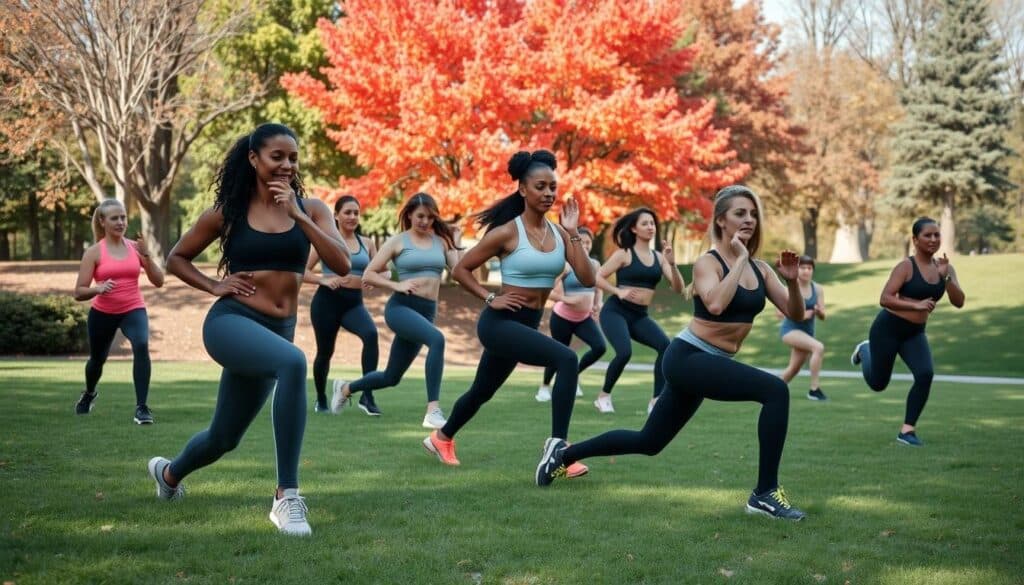
Discover the top 10 best leg exercises for sculpting your thighs and glutes to perfection. Get ready for a stronger, toned lower body today!
On this page
In the United States, many people focus on toning their legs and glutes. Doing regular leg workouts can make your legs look more sculpted. It also boosts your strength and stability.
If you’re new to working out or have been doing it for a while, adding thigh toning exercises is smart. They fit well into any fitness plan.
Choosing the right exercises can really show results. This guide will show you the top 10 exercises for a strong lower body. You’ll feel more confident and powerful. Are you ready to start? Keep reading to learn how to tone your lower body!
Key Takeaways
- Leg workouts are essential for overall strength and stability.
- Effective leg exercises can help you achieve a sculpted lower body.
- Thigh toning workouts are beneficial for both beginners and advanced individuals.
- Consistency and variety are key for tightening and toning your legs.
- Incorporating these exercises can boost your confidence and appearance.
Why Leg and Glute Workouts are Important
Adding leg and glute workouts to your routine is key for many reasons. Lower body strength training improves your posture and balance. It helps you stay steady and aligned all day long.
Working on your legs and glutes also boosts your metabolism. Building muscle in these areas means you burn more calories even when you’re not moving. This makes it easier to manage your weight.
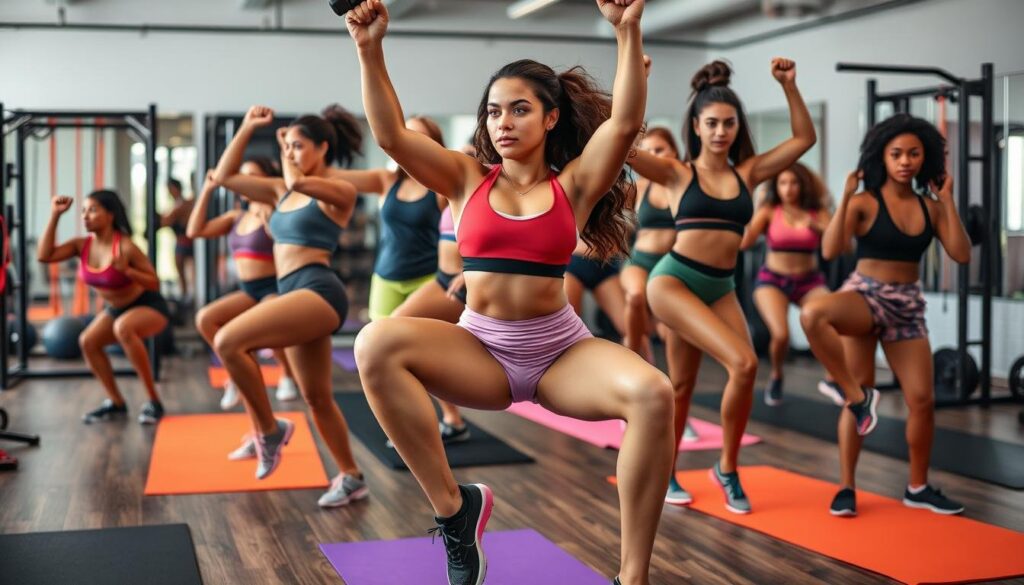
Also, focusing on best exercises for toned calves and glutes can improve your sports skills. Strong legs are essential for many sports, making you faster and more agile.
Regular lower-body workouts can also help reduce the risk of some injuries. They strengthen muscles around your knees, hips, and ankles. This makes your body more stable, reducing injury risks in sports and everyday life.
Squat Variations for Glutes
Working on squat variations can really boost your glute toning and strength training. These exercises target different muscles in your legs and glutes. This ensures balanced growth and better performance.
Basic Squats
The basic squat is key for toning your glutes. Here’s how to do it right:
- Stand with your feet shoulder-width apart.
- Lower your hips back and down, like sitting in a chair.
- Keep your chest up and knees over your toes.
- Stand up by pushing through your heels.
Doing basic squats often helps build strong glutes and legs.
Sumo Squats
Sumo squats target your inner thighs and glutes well. Here’s how to do them:
- Stand wide with your toes pointing slightly outward.
- Squat down, keeping your hips back and chest up.
- Make sure your knees are in line with your toes.
- Push through your heels to get back up.
Sumo squats boost hip mobility and muscle engagement, making them great for glutes.
Bulgarian Split Squats
Bulgarian split squats focus on one leg at a time for unilateral strength. Here’s how to do them:
- Stand a few feet in front of a bench or step.
- Place one foot behind you on the bench.
- Lower your hips until your front thigh is parallel to the ground.
- Drive through your front heel to get back up.
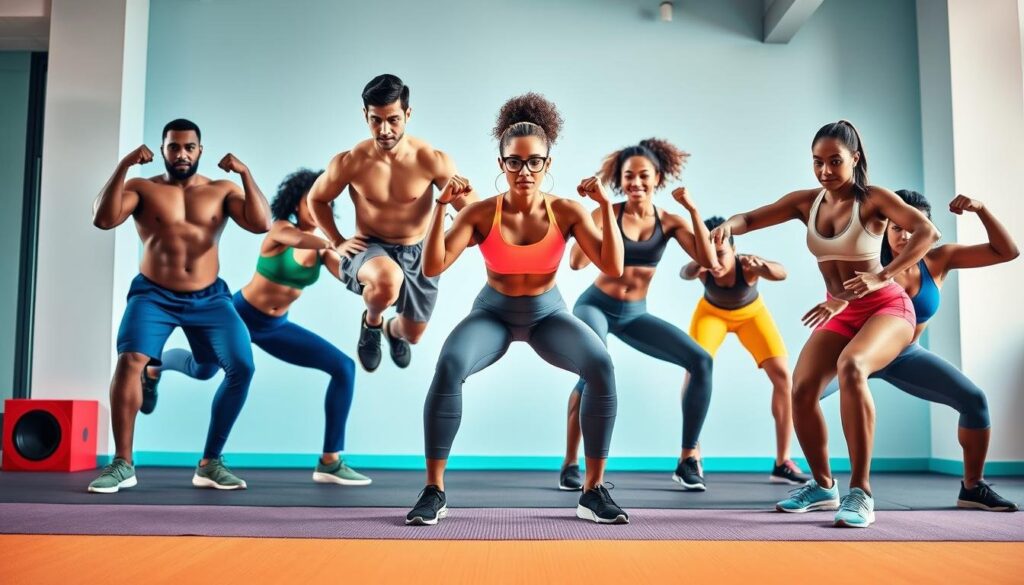
Effective glute toning workouts include hip thrusts for glutes and various squats. By mixing exercises like basic squats, sumo squats, and Bulgarian split squats, you get balanced muscle growth and dynamic strength.
Best Leg Exercises
To build strong, muscular legs, you need to mix up your exercises. The best leg workouts target different muscles and use various equipment. This ensures your legs grow evenly and stay balanced.
Lunges are a top choice for leg workouts. They come in different types like walking lunges and reverse lunges. These exercises help improve balance and build muscle.
The leg press is another great exercise. It lets you lift heavy weights safely. This machine works on your quads, hamstrings, and glutes, helping your legs grow strong.

Calf raises are key for your lower legs. Standing and seated calf raises work different parts of your calf muscles. Adding these to your leg workouts makes sure all muscles are worked.
Plyometric exercises like box jumps boost leg strength and power. They focus on fast-twitch muscles, which are important for quick movements and sports performance.
Resistance bands are also valuable. Exercises like banded leg presses and side-lying leg lifts with resistance bands add intensity. They target smaller muscles that help stabilize your movements.
- Lunges (Walking, Reverse)
- Leg Press
- Calf Raises (Standing, Seated)
- Box Jumps
- Banded Leg Presses
- Side-Lying Leg Lifts with Resistance Bands
| Exercise | Target Muscles | Equipment Needed |
|---|---|---|
| Lunges | Quads, Hamstrings, Glutes | None |
| Leg Press | Quads, Hamstrings, Glutes | Leg Press Machine |
| Calf Raises | Gastrocnemius, Soleus | None |
| Box Jumps | Quads, Glutes, Calves | Box |
| Banded Leg Presses | Quads, Hamstrings, Glutes | Resistance Bands |
| Side-Lying Leg Lifts | Glutes, Hip Flexors | Resistance Bands |
Deadlifts for Leg Toning
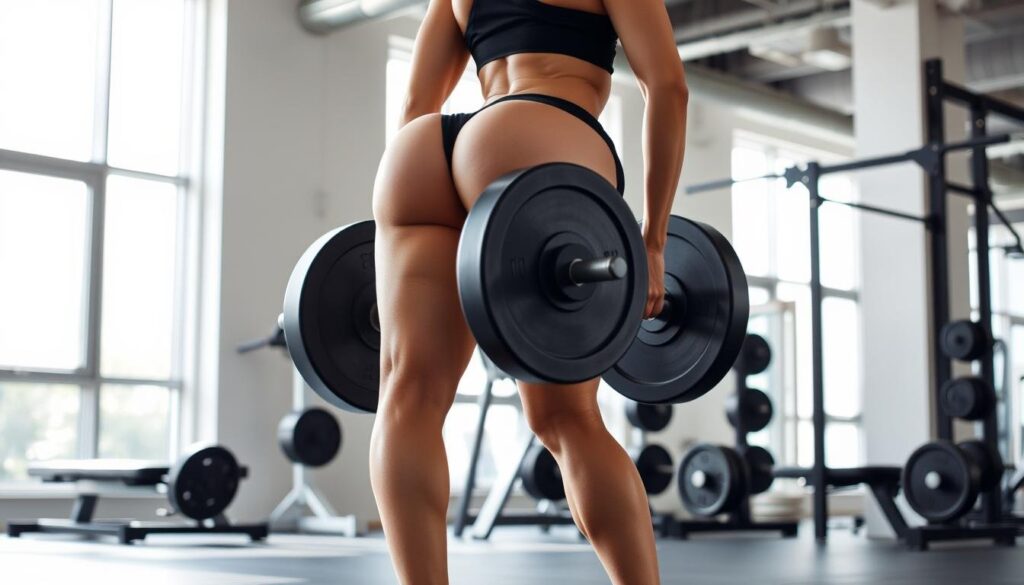
Deadlifts are key for a strong lower body. They help tone your legs and strengthen your hamstrings. There are three main types: Conventional, Romanian, and Sumo.
Conventional Deadlifts
The conventional deadlift is well-known. It works many muscles at once. When you lift the bar, you work your glutes, hamstrings, and lower back.
It’s important to do it right to avoid injury. Keep your back straight, core tight, and feet apart.
Romanian Deadlifts
Romanian deadlifts are great for your hamstrings. They focus on lowering the bar to mid-shin. This makes your hamstrings work harder.
Keep your knees slightly bent and hinge at the hips. This helps stretch and contract your hamstrings.
Sumo Deadlifts
Sumo deadlifts use a wider stance. They work your inner thighs and glutes more. This makes your lower body stronger.
Stand wider than shoulder-width apart. Point your toes slightly outwards. Keep your back straight and push through your heels.
Adding these deadlifts to your workout routine is good. They help balance muscle growth and tone your legs. Always be consistent and use the right technique to avoid injury.
Lunges for Stronger Legs
Lunges are great for strengthening your legs and toning your thighs. They improve lower body strength, balance, and coordination. Let’s dive into the different types of lunges and their benefits for fitness.
Walking lunges add a fun twist to your workout. Each step keeps your muscles working hard, building endurance and strength.
“Walking lunges are a fantastic way to build lung strength and stability. They also promote functional fitness by mimicking daily activities.” – Jane Fonda
Reverse lunges are perfect for beginners or those recovering from injuries. They’re gentle on the knees and help muscles grow without extra stress.
Lateral lunges target your inner and outer thighs. This side-to-side movement is key for working muscles often missed by other exercises.
- Walking Lunges: Enhance endurance and strength.
- Reverse Lunges: Low-impact, ideal for beginners or rehabilitation.
- Lateral Lunges: Engage inner and outer thigh muscles.
Adding these lunges to your routine boosts leg strength and fitness. Mix them with exercises for toned thighs for the best results.

A full workout might include lunges and glute bridges for balanced muscle growth. Let’s see how each lunge type stacks up in the table below.
| Type of Lunge | Muscle Groups Targeted | Benefits |
|---|---|---|
| Walking Lunges | Quads, Hamstrings, Glutes | Increases endurance and functional strength |
| Reverse Lunges | Quads, Hamstrings, Glutes | Less impact on knees, aids recovery |
| Lateral Lunges | Inner Thighs, Outer Thighs, Glutes | Engages often neglected muscles |
Bodyweight Leg Exercises
Adding bodyweight leg exercises to your workout can tone your legs and glutes. You don’t need any equipment. These exercises are great and can be adjusted based on your fitness level.

Pistol Squats
Pistol squats are a tough single-leg exercise. They improve balance and tone the leg, focusing on the inner thighs. Start by standing on one leg, extend the other leg forward, and then squat down. This exercise requires strength and stability.
Step-Ups
Step-ups are excellent for stronger legs. You can use a step or bench. To do step-ups for stronger legs, step up with one foot, push through your heel to go up, and then come back down. This works your glutes, quads, and hamstrings for a full leg workout.
Glute Bridges
Glute bridges are great for your glutes, hamstrings, and lower back. Lie on your back, bend your knees with feet on the floor, and lift your hips up. Glute bridges are key for balanced strength and fit well with inner thigh toning exercises.
Leg and Glute Workout Plan
A good leg and glute workout plan is key for a balanced lower body workout. It makes your leg day routine more effective. You’ll get a schedule, reps, sets, and tips to follow.
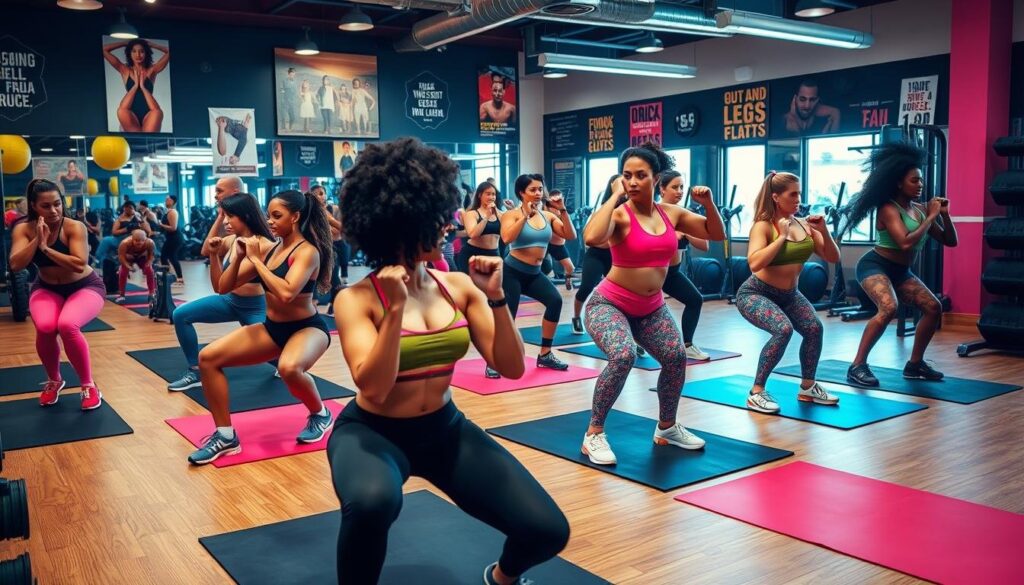
Here’s a weekly schedule for your leg day routine:
| Day | Workout | Reps | Sets |
|---|---|---|---|
| Monday | Squats | 12 | 4 |
| Wednesday | Deadlifts | 10 | 4 |
| Friday | Lunges | 15 | 3 |
Adding variety to your lower body workout targets different muscles. This helps avoid getting stuck in a routine. Here are some tips:
- Warm up well to get your muscles ready and prevent injuries.
- Use a mix of compound and isolation exercises.
- Focus on proper form to get the most out of your workout and stay safe.
- Slowly add more weight and resistance to build muscle strength.
- Make sure to include rest days for muscle recovery and growth.
By sticking to this leg and glute workout plan, you’ll see stronger, more toned legs and glutes. Adjust the plan to fit your fitness level and goals. Remember, staying consistent is important.
At-Home Leg Exercises
Working out at home can be very effective. It helps tone and strengthen your legs. Plus, it’s great for those without gym equipment. This makes sticking to a workout plan easier.

Household items are key for leg workouts at home. Things like chairs, water bottles, or books can be used. For example, a sturdy chair can help with step-ups or Bulgarian split squats.
For a good at-home workout, mix up the exercises. This targets different leg and glute muscles. Here are some no-equipment exercises:
- Chair Step-Ups: Use a chair to step up and down, working your quads and glutes.
- Bodyweight Squats: Squat without weights to tone your legs and glutes.
- Single-Leg Romanian Deadlifts: Hold a water bottle and bend forward, focusing on hamstrings and glutes.
Healthline has a great list of 15 at-home leg exercises. It shows how to do each one right. This list has simple and advanced exercises to keep you challenged.
Sticking to a workout plan and adding these exercises will improve your leg and glute strength. You can do these exercises during breaks or in a dedicated session. The most important thing is to be consistent and vary your routine.
Here’s a comparison of household items and gym equipment:
| Household Item | Gym Equipment | Exercise |
|---|---|---|
| Chair | Bench | Step-Ups, Dips |
| Water Bottles | Dumbbells | Bicep Curls, Shoulder Press |
| Towel | Resistance Band | Leg Curls, Rows |
Using these substitutions makes your at-home leg exercises just as effective. You don’t need traditional gym tools.
Resistance Band Glute Exercises
Resistance bands can take your glute workouts to the next level. They add extra resistance and help engage your muscles. This makes your workout more effective and fun. We’ll explore banded squats, clamshells, and banded side steps. You’ll learn how to use these exercises to target your glutes well.
Banded Squats
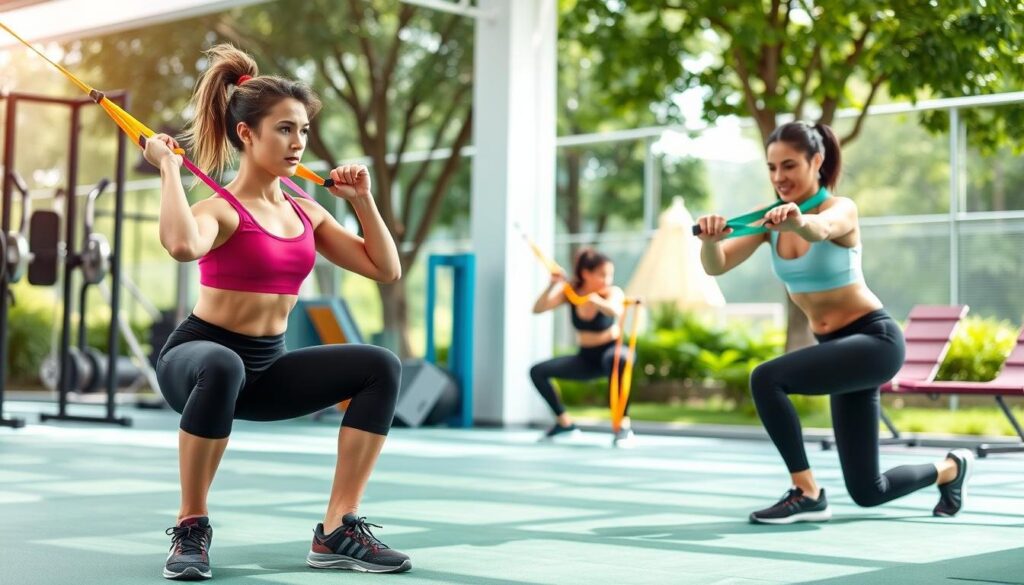
Banded squats are key for glute exercises with resistance bands. The band around your thighs makes your glutes work harder. Stand with your feet shoulder-width apart and keep the band tight. This focus on technique makes the exercise more intense.
Clamshells with Resistance Bands
Clamshells with bands are great for working your outer glutes. Lie on your side with the band above your knees. Lift your top knee slowly while keeping your feet together. This targets your outer glutes well. Make sure to control the movement for better results.
Banded Side Steps
Banded side steps are also excellent for glute exercises. Put the band around your ankles and bend your knees a bit. Step to the side, keeping the band tight. This exercise strengthens your glutes and is a good glute isolation exercise. Add these steps to your workout for the best results.
| Exercise | Target Muscles | Benefits |
|---|---|---|
| Banded Squats | Glutes, Quads, Hamstrings | Enhanced muscle activation |
| Clamshells with Resistance Bands | Outer Glutes | Improved outer glute strength |
| Banded Side Steps | Glutes | Great glute isolation |
Advanced Glute Training Techniques
Advanced glute training takes your fitness to the next level. It pushes those muscles beyond basic workouts. For those who crave more intense challenges, weighted glute exercises can significantly boost your results. Adding weights like dumbbells or barbells increases resistance, helping muscle growth and toning.
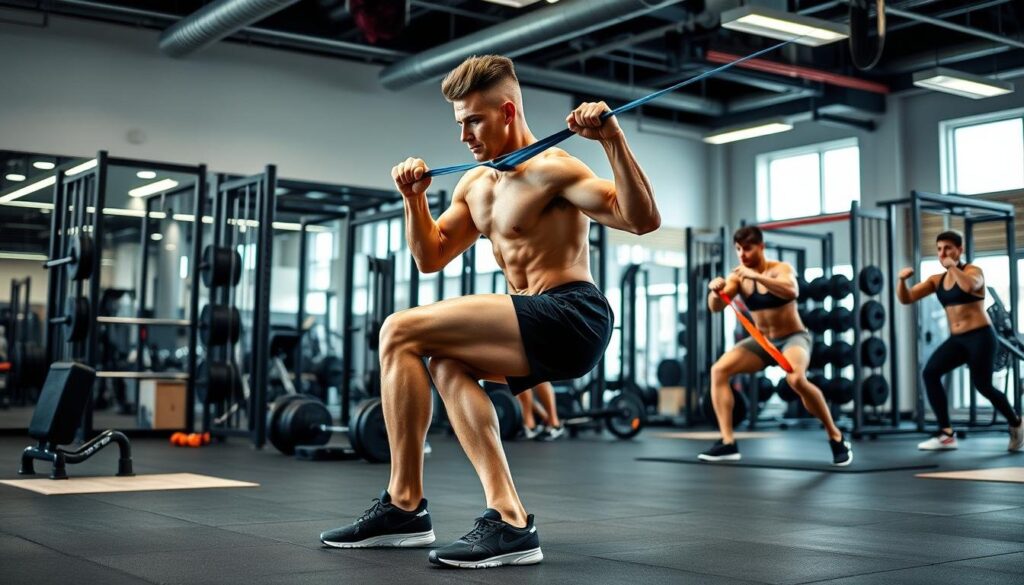
Integrating plyometric leg workouts into your routine can enhance muscle power and explosiveness. Plyometrics, like jump squats and high box jumps, combine strength and speed. They offer a dynamic edge to your training regimen. These exercises not only build the glutes but also improve overall athletic performance.
Another key aspect of advanced glute training is progressive overload. It involves gradually increasing the weight, frequency, or intensity of exercises. This method ensures continuous adaptation and muscle growth.
| Technique | Description | Benefits |
|---|---|---|
| Weighted Glute Exercises | Utilizing equipment like barbells, dumbbells for increased resistance. | Enhances muscle growth and toning. |
| Plyometric Leg Workouts | Includes explosive movements such as jump squats and box jumps. | Boosts muscle power and athletic performance. |
| Progressive Overload | Gradually increases weight, frequency, or intensity. | Promotes continuous muscle adaptation and growth. |
Conclusion
Keeping up with a regular leg and glute workout is key to a strong lower body. This article has shown many effective leg exercises like squats, deadlifts, and lunges. You can do these at the gym or at home, making it easy for everyone.
For a full leg workout recap, try different squat types like basic and sumo squats. Lunges and deadlifts, in their various forms, also help a lot. Adding resistance bands to your routine can make exercises like banded squats more intense.
If you’re looking for the *best gym machines for glutes*, consider the leg press and glute kickback machines. The most important thing is to stay committed and keep pushing yourself to get better. For more tips on fitness, check out this link.
FAQ
What are the most effective leg exercises to tone my legs and glutes?
Squats, lunges, deadlifts, and step-ups are top choices. They work on many muscles, like glutes and legs, to tone and strengthen.
Why are leg and glute workouts important for overall fitness?
They boost posture, speed up metabolism, and improve sports skills. They can also help reduce injury risk by strengthening the lower body.
Which squat variations are best for targeting the glutes?
Try basic squats, sumo squats, and Bulgarian split squats for glute focus. Each type works the glutes in a unique way, helping to tone and build strength.
What are some highly recommended leg exercises for muscle growth?
Squats, deadlifts, leg presses, and lunges are great for muscle growth. They help build strength and increase muscle in the legs.
How can deadlifts help in leg toning and what variations should I try?
Deadlifts work the hamstrings, glutes, and lower back, toning legs well. Try conventional, Romanian, and sumo deadlifts for different muscle focuses.
What types of lunges are beneficial for stronger legs?
Walking lunges, reverse lunges, and lateral lunges are good for strong legs. They target various thigh and glute areas, giving a full lower body workout.
What are some effective bodyweight leg exercises?
Pistol squats, step-ups, and glute bridges are effective without equipment. They’re great for home workouts, providing significant benefits.
Can you recommend a complete leg and glute workout plan?
Include squats, lunges, deadlifts, and bodyweight exercises in your plan. Use sets and reps, and remember rest days for best results.
What are some good at-home leg exercises?
Squats, lunges, step-ups, and glute bridges are good for home. They need little to no equipment, perfect for a home workout routine.
How can resistance bands be used for glute exercises?
Use resistance bands for banded squats, clamshells, and side steps. They add resistance, making exercises more challenging and effective for glutes.
What are some advanced glute training techniques?
Try weighted hip thrusts, plyometric jump squats, and progressive overload. These methods increase workout intensity, promoting muscle growth and strength.